Entering the U.S. Market: A Guide for Entrepreneurs
COMMERCIAL CONTRACTS


Expanding your business into the United States opens the door to a massive market, stronger investor interest, and increased global credibility. But with these opportunities come complex legal and tax obligations that differ significantly from other jurisdictions, and missing even one requirement can lead to delays, penalties, or disrupted growth plans.
For foreign founders, understanding the U.S. regulatory landscape is essential. From corporate structure and taxes to immigration, employment, and intellectual property, the U.S. market requires careful preparation. This guide outlines the most common pitfalls foreign founders encounter—and how to avoid them to ensure a smooth and compliant expansion.
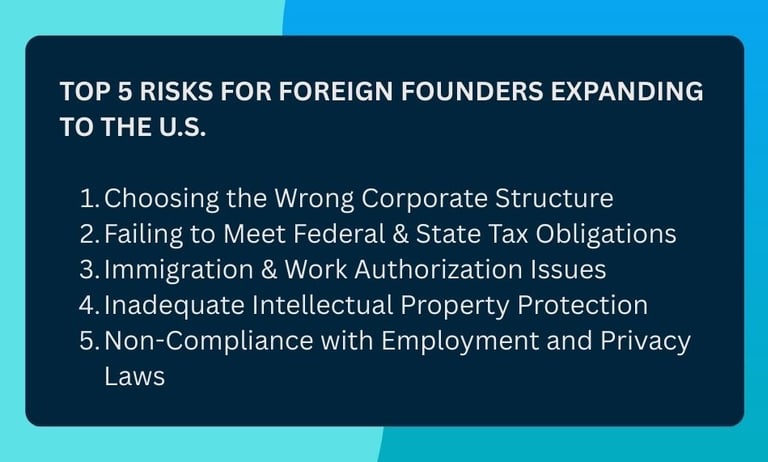
1. Choose the Right Corporate Structure
Your U.S. entity is the foundation of your expansion. Selecting the wrong structure or state of formation can impact taxation, ownership, and eligibility for investment. Ensure the following is in place:
Delaware C-Corporation formation (if seeking venture capital)
Foreign qualification in any additional states where you operate
Proper issuance of founders’ stock
Clear vesting schedules and ownership documentation
2. Understand Federal and State Tax Obligations
The U.S. tax system is multilayered, and foreign founders often overlook state-level taxes or federal filing requirements for foreign-owned companies. Review your obligations in these areas:
Federal income tax and withholding rules
State franchise taxes, sales taxes, and income tax nexus
Permanent establishment risks under tax treaties
Annual filings such as Form 1120 and Form 5472
3. Address Immigration and Work Authorization Requirements
Operating in the U.S. without proper authorization can create significant legal risks—founders should plan immigration strategy early. Evaluate the following:
Suitable founder-friendly visas (E-2, L-1A, O-1)
Activities permitted under ESTA or B-1/B-2 visas
Employer I-9 compliance for U.S. hires
Immigration timelines relative to fundraising and business launch
4. Protect Intellectual Property in the U.S.
IP rights do not automatically transfer across borders. Protecting your intellectual property early is essential for growth and investment.
Register U.S. trademarks for your brand
Ensure IP assignment agreements for founders, employees, and contractors
Document ownership of software, inventions, and trade secrets
Secure patents before public disclosure
5. Manage Cross-Border Ownership and Tax Residency Risks
Where founders live and how ownership is structured can create unexpected tax exposure.
Assess U.S. tax residency implications for founders
Comply with foreign ownership reporting requirements
Manage cross-border income and withholding obligations
Avoid double taxation in the U.S. and home country
6. Comply With U.S. Employment Laws
Hiring U.S. workers triggers federal, state, and local obligations, even for a single employee.
Classify workers correctly (employee vs. contractor)
Use compliant offer letters, agreements, and confidentiality terms
Follow state-specific rules on pay, breaks, and termination
Maintain workers’ compensation and insurance coverage
7. Maintain Corporate Compliance From Day One
Investors expect clean, accurate records and consistent compliance.
File annual reports and pay franchise taxes
Keep board resolutions and meeting minutes up to date
Maintain a registered agent in every state of operation
Document all stock, option, SAFE, and convertible note issuances
8. Meet U.S. Data Privacy and Consumer Protection Standards
Privacy laws vary by state, and GDPR compliance alone is insufficient.
Comply with CCPA/CPRA requirements for California consumers
Maintain U.S.-specific privacy policies and terms of service
Follow rules for data storage and breach notifications
Track emerging privacy laws in other states
Ket Takeaways
Expanding into the U.S. requires more than forming a company—it demands a strong legal and tax foundation. By addressing these obligations early, foreign founders can minimize risk, avoid delays, and position their company for long-term success in the world’s largest market.
Call to Action
Law Chapter helps foreign founders enter the U.S. market with clarity and confidence. Our subscription-based services provide ongoing guidance to protect your IP, maintain compliance, and avoid costly mistakes.
Contact us at contact@lawchapter.com to build your U.S. expansion on a stronger legal foundation.