LLC or Corporation: Which Is Right for Your Business Structure?
CORPORATE STRUCTURING


Choosing how to structure your business is one of the most important legal decisions you’ll ever make. The right choice can protect your personal assets, optimize taxes, and set your company up for growth. The wrong one can lead to unnecessary complexity—or worse, exposure to risk.
At Law Chapter, we help business owners make this decision with confidence through transparent, subscription-based legal support that eliminates hourly billing surprises. Let’s break down the differences between an LLC and a Corporation, and how to decide which best fits your goals.
What Is an LLC?
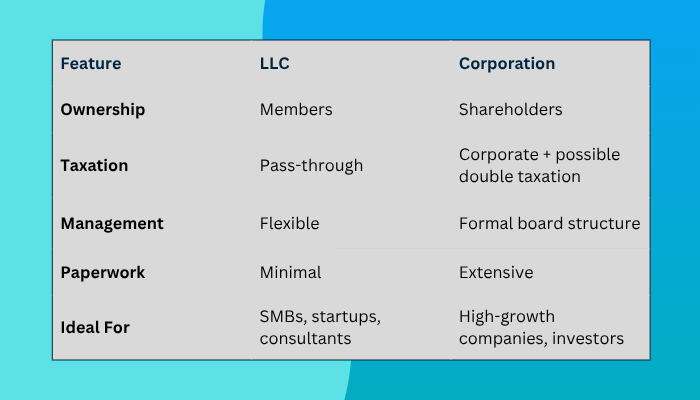
A Limited Liability Company (LLC) is a flexible business structure that combines the simplicity of a sole proprietorship with the liability protection of a corporation. It’s often the go-to choice for small businesses, freelancers, and startups that want legal protection without the formality of corporate governance.
Key benefits of an LLC:
Limited liability protection: Owners (called members) aren’t personally liable for business debts.
Flexible management: You can run the company yourself or appoint managers.
Pass-through taxation: Profits and losses pass through to your personal tax return—no corporate taxes.
Fewer formalities: LLCs don’t require annual shareholder meetings or corporate minutes.
When an LLC makes sense:
If you’re running a small or medium-sized business that values flexibility, wants to minimize paperwork, and doesn’t plan to raise venture capital soon, an LLC is likely the best fit.
What Is a Corporation?
A Corporation is a more formal legal entity that’s separate from its owners (shareholders). It’s designed for businesses that want to raise capital, issue stock, or attract investors.
Key benefits of a corporation:
Investor-ready structure: Corporations can issue shares and attract outside investment.
Perpetual existence: The company continues even if ownership changes.
Potential tax advantages: Corporations can retain earnings and deduct benefits.
Enhanced credibility: Corporations often appear more established to banks and investors.
When a Corporation makes sense:
If you’re planning to scale, seek investors, or eventually go public, a corporation offers the structure and credibility you’ll need. However, it comes with stricter compliance requirements—like annual meetings, bylaws, and board oversight.
The Legal Bottom Line
Your business structure shapes everything—from how you pay taxes to how you make decisions and protect your assets. Choosing between an LLC and a Corporation isn’t just about paperwork—it’s about aligning your legal framework with your business goals.
That’s why Law Chapter’s subscription-based legal plans make so much sense. Instead of paying unpredictable hourly fees, you get continuous legal guidance to structure, manage, and evolve your company as it grows—without worrying about every billable minute.
Final Thoughts
Whether you’re forming your first business or restructuring an existing one, getting the legal foundation right can save you time, money, and stress down the road.
At Law Chapter, we believe in transparent, predictable legal support. Our subscription model gives you access to experienced corporate attorneys who help you choose, form, and maintain your business entity—so you can focus on building, not worrying.
Ready to find out which structure fits your business best?
Start your legal subscription with Law Chapter today and get the clarity your company deserves. Email us at contact@lawchapter.com to learn which subscription package fits your organization.